
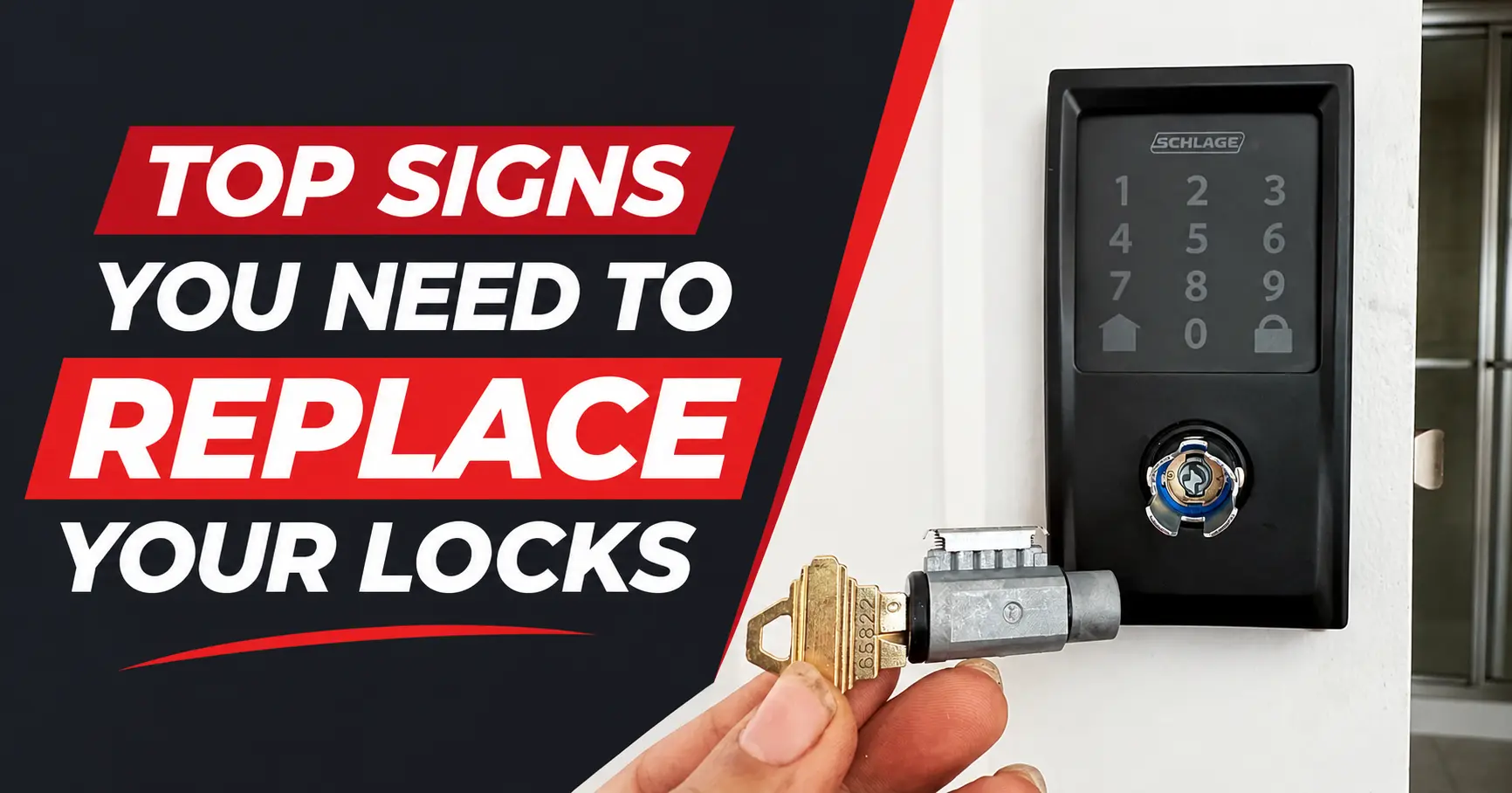
Your locks are the first line of protection for your home, but how do you know when they are no longer doing their job? Sticking keys, visible damage, missing keys, or outdated security features can all signal that your locks need attention. Ignoring these warning signs may leave your home less secure and make everyday access more difficult. Knowing when to consider home lock replacement helps you protect your property, control access, and choose options that fit your current needs.
Here are the top signs that it may be time to replace old locks.
1. Your Locks Are Difficult to Use
Difficulty opening or closing your door can signal broken door hardware, a sticking deadbolt, a bolt that won’t retract, or a lock that doesn’t fit your door; sub-par materials and worn internal components can also cause a faulty lock and a potential safety hazard. Difficulty turning the Key is another warning sign, especially if you cannot easily insert, turn, or remove it because the lock’s internal mechanisms stick or jam, increasing the chance of a complete lockout or a key breaking inside the lock.
CNET recommends inspecting existing locks and doors for jamming and wear before fitting a replacement, since door or strike-plate alignment can also cause problems; when needed, professional residential locksmith services can help you choose worn or damaged lock replacements, or a higher-quality doorknob or lever with a BHMA rating graded A, the highest in Durability, for smooth operation and reliable security.
Key sticking or breaking
A key that keeps sticking or breaking off inside the lock may indicate a worn lock that needs attention. When locks have aged past the point of usefulness, replace them to avoid the same risks, including key damage, access problems, and unexpected lockouts.
2. Worn Out Locks
Worn-out locks may stop working effectively despite repair and maintenance, especially after years of use and regular wear and tear, creating a security threat to your property. Old locks may become difficult to open with your original keys and easier to pick during a break-in; if water has made its way into your locks, replacement is inevitable, so hire a locksmith to determine how it got in and recommend the necessary repairs.
You can install a screen door to protect your locks from rain, but if keys often get stuck, replace the locks as soon as possible because keys may break and leave you stranded.
Age
Remember how old your locks are, as some may become too old to be on your door after the average lifespan of a lock, around 5-7 years; consider replacing locks that are older than this because they are more likely to fail or break, creating a major security risk or leaving you locked out of your home. An older lock may not look as good and may be vulnerable to bypass methods that manipulate its internal mechanism.
Visible damage
Visible damage, such as cracked or broken housing, can weaken your locks and make them easier to tamper with. Along with lost or stolen keys, these problems are reasons to replace your locks as soon as possible to prevent unauthorized access to your property.
Rust and Corrosion
Exposure to the elements, high humidity, and saltwater can cause rust and corrosion in door locks, weaken internal components, and make them easier to break or pick. Corrosion can also cause the lock to seize up, making it difficult or impossible to operate, so signs of rust or corrosion may mean it is time to replace it.
3. Missing, Stolen, and Lost Keys
Missing or stolen keys create a serious security concern because someone unauthorized may have one, especially if the keys contain identifying information about your home; whether you have lost them somewhere inside your house or someone has access to your original keys, seek locksmith services to prevent unauthorized entry, even without signs of a pending home invasion.
Lifehacker lists lost or stolen house keys as a reason to rekey: changing the internal pins invalidates old keys while keeping the existing hardware, making rekeying a better option than making duplicates; however, if rekeying isn’t an option, replacing your locks entirely is the safest choice.
Consider changing your locks as soon as possible, getting replacement keys, and replacing your door lock immediately when necessary, as negligence can come at a higher price; new locks give you full control over who has access to your home and restore peace of mind.
4. Moved to a New Home
Moving into a new home is a good time for changing the locks on your doors, as you may not know the history of people who have had access to your home, including real estate agents, contractors, or anyone who duplicates keys; the key from the previous owners may not be the only one, since extra keys to the house or copies are floating around.
As a necessary precaution, check the integrity of your locks and consider rekeying them or choosing lock replacement for all the doors to ensure that no one else has a key to your home, get new keys, and improve your home security; when installing new locks, consider the value of a quality lock, such as a mechanical deadbolt or electronic deadbolt, rather than a sub-standard lock that may not protect your home or save money in the long run.
Keypad entry locks let you grant, remove, and restrict access as needed, while replacing door locks gives you full control over who can access your home instead of assuming you are the only one with access to your property.
5. Experienced a Break-in
A recent burglary or attempted break-in can involve force that compromises your locks, putting them at higher risk of further damage; manipulated or picked locks, mechanical damage, or internal damage can weaken a lock and compromise its integrity, leaving your property vulnerable or even locking you out of your home.
If you have a break-in, call the police, your insurance company, and a professional locksmith; then call your locksmith to inspect the damage and determine whether your current locks are sufficient to deter intruders. After a recent break-in or Attempted Break-In, change your locks immediately, preferably with high-security locks from reputable door lock brands, to protect your property and reduce the risk of future break-ins.
6. Lack of Security Features
Lack of security features in older locks, such as missing modern security features, exterior deadbolts, keyless entry, and bump-proof mechanisms, may leave your home less protected; consider high-security options with premium materials, robust materials, durable, high-quality hardware, and High-quality craftsmanship built for Durability and to stand up to the test of time, with a Lifetime warranty or limited lifetime mechanical and finish warranty where offered.
Upgrading Security with modern lock technology, including smart lock capabilities that let you control access to your home through your smartphone, can provide a more secure lock; compare the level of security, durability, and ease of use before choosing. Also, outdated or mismatched locks may no longer suit replaced doors, updated finishes, or a renovation, so choosing newer styles or finishes for your door hardware can improve your home’s overall appearance, appeal, and cohesion.
Changes in Your Security Needs
Your security needs change as you add valuable items to your home, start working from home, or notice changes in your neighborhood’s crime rate. These changes may mean upgrading to high-security locks, smart locks, or advanced locking mechanisms that provide added protection and help you feel secure.
7. You’ve Had a Life-Changing Event
A life-changing event can affect how you use your home, so your locks should adapt with your lifestyle through different life stages, including a change in marital status, new members of the household, or situations where you blend families. Different door hardware may suit a home office or a child’s room; when choosing door locks for toddlers, consider a passage function to prevent them from locking themselves in, and use passage and privacy functions to select suitable hardware for each room.
Electronic and smart locks offer secure access through access codes, which can help with issues like kids losing a spare key; when someone moves out, consider new hardware or changing the locks to update who can enter your home.
8. It Doesn’t Match Your Style
Your door hardware should match your home’s overall style, but an outdated knob or lever can stick out and look out of place. Whether you’re renovating your entire home or giving a single room a facelift, upgrading your hardware can help match your new design, with styles and finishes that fit nearly any home.
9. Keypad or Smart Lock Malfunctions
Keypads or smart locks can malfunction, including unresponsive keypads, connectivity problems, and software glitches that compromise security, especially when internal battery life runs low or power issues occur. Regular maintenance and updates may fix these problems, but BBC reported that an Austrian hotel returned to traditional keys after four cyberattacks between December 2016 and January 2017 disrupted its systems, a historical commercial example rather than a residential smart-lock failure rate; when problems persist, replacing the lock with a new model may be the best solution.
Are Your Home Locks Ready for Replacement in Frederick, MD?
Don’t wait until a damaged lock, missing key, or security problem puts your home at risk. Whether you need to replace worn locks, upgrade to high-security options, or improve your home’s access control, AA Locksmith Near Me can help you find the right solution. Contact us today to discuss your residential lock replacement needs and keep your home protected.
Frequently Asked Questions About Lock Replacement
What features can you consider when replacing an old lock?
Look for high-security locks with bump-proof mechanisms, durable materials, and strong construction. You can also consider deadbolts, keyless entry, and smart lock features that let you manage home access through your smartphone. Choose a lock that balances security, durability, ease of use, and style.
Should you replace locks after losing a key or moving into a new property?
Yes, replacing or rekeying your locks can help protect your home after you lose a key or move into a new property. Rekeying changes the internal pins so old keys no longer work, while full lock replacement is a good option when the existing locks are damaged or rekeying isn’t possible.
Why can outdated locks create a security risk?
Outdated locks may lack modern security features, making them easier to pick, bypass, or tamper with. Worn internal components, rust, and mechanical damage can also affect their performance and leave your home less protected against unauthorized entry.