
Your front door is the first line of defense for your home, so the lock you choose matters. Traditional deadbolts have protected homes for generations. Smart locks, meanwhile, promise keyless convenience and remote control. Both can keep your home secure, but they suit different lifestyles. Here is how to decide.
What Is a Traditional Deadbolt?
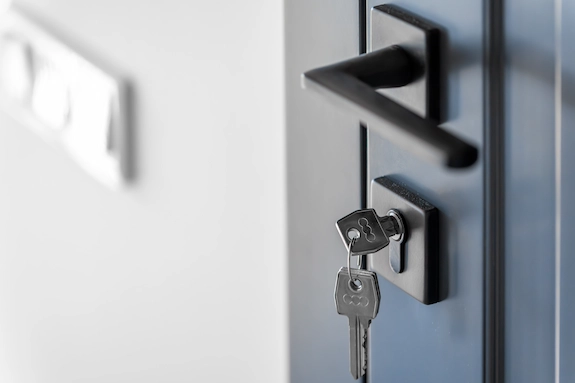
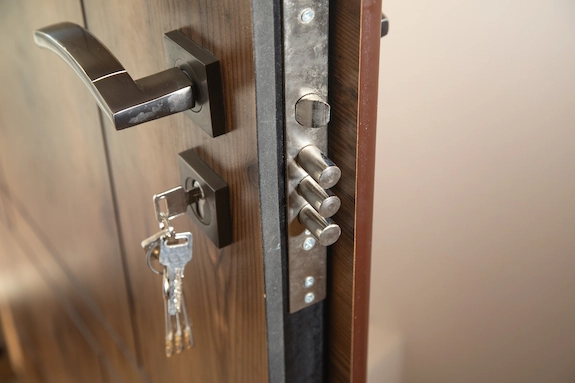
A deadbolt is a mechanical lock with a solid metal bolt that slides deep into the door frame. It has no batteries, no Wi-Fi, and no app. You lock and unlock it with a physical key or a thumb-turn on the inside.
Pros
- Proven reliability: A well-made deadbolt has very few parts that can fail.
- No power needed: It works during a power outage and never runs out of battery.
- Affordable: Quality deadbolts cost much less than smart locks.
- Immune to hacking: A purely mechanical lock cannot be attacked over a network.
Cons
- Keys can be lost, stolen, or copied.
- No access control: You cannot easily give a guest temporary access.
- No activity record: You will not know who came in or when.
Key Factors to Consider
1. Security level
A lock’s strength depends more on its build quality than on whether it is smart. Look for a lock graded by the Builders Hardware Manufacturers Association (BHMA). Grade 1 is the highest residential rating. Whichever type you choose, the bolt, strike plate, and door frame all need to be strong.